Characterization of cancer cell membranes
Discovery of new targets for cancer therapy
We identify cancer-specific features such as:
Membrane lipids: e.g. phosphatidylserine (PS) exposed on cancer cell membranes, alterations in sphingolipid or other lipid patterns
Membrane proteins and lipid metabolism: lipid-metabolizing enzymes
The biggest problem in cancer therapy is the lack of a cancer-specific target for the applied cytostatic drugs besides excessive growth. We investigate the differences in the outer surface of cell membranes of cell lines, primary cells and patient-derived cells of melanoma, glioblastoma, rhabdomyosarcoma, renal, pancreatic, colon and prostate cancer of predominantly human, but also murine, equine and canine origin.
Publication:
Riedl et al, 2011,doi: 10.1016/j.bbamem.2011.07.026.
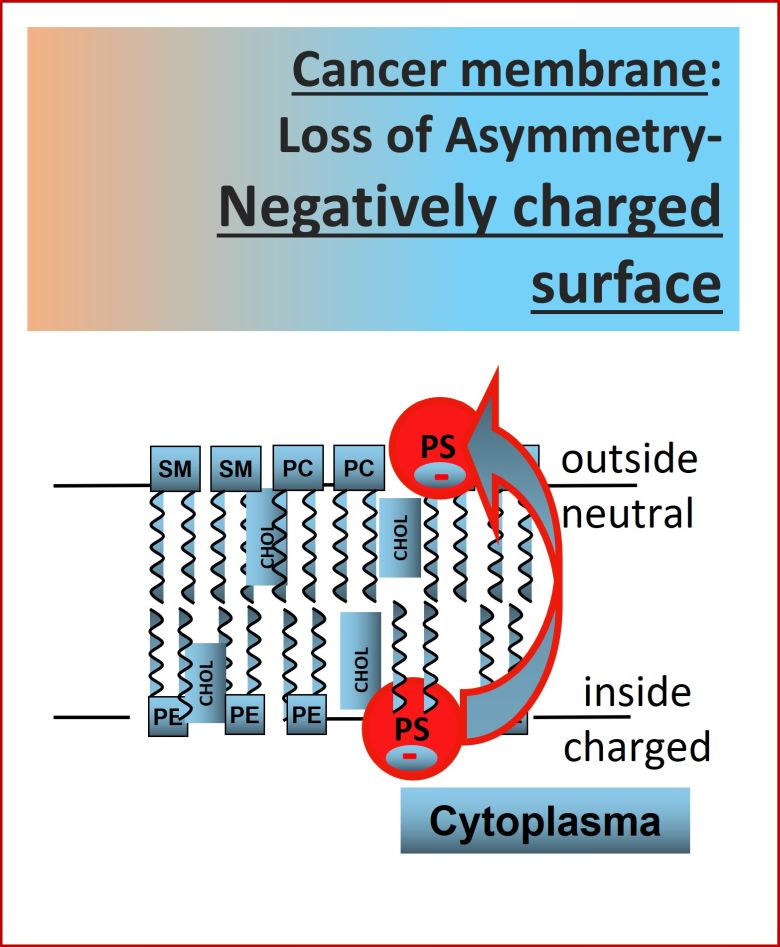
©S. Riedl, D. Zweytick
PS exposure of malignant cells - an Achilles' heel of cancer cells?
Malignant cells can no longer maintain the lipid asymmetry of their cell membranes, resulting in exposure of the negatively charged phospholipid phosphatidylserine PS, which is normally directed inwards. This distinguishes cancer membranes from membranes of normal cells.
Design: S. Riedl, D. Zweytick
Malignant cells can no longer maintain the lipid asymmetry of their cell membranes, resulting in exposure of the negatively charged phospholipid phosphatidylserine PS, which is normally directed inwards. This distinguishes cancer membranes from membranes of normal cells.
Design: S. Riedl, D. Zweytick